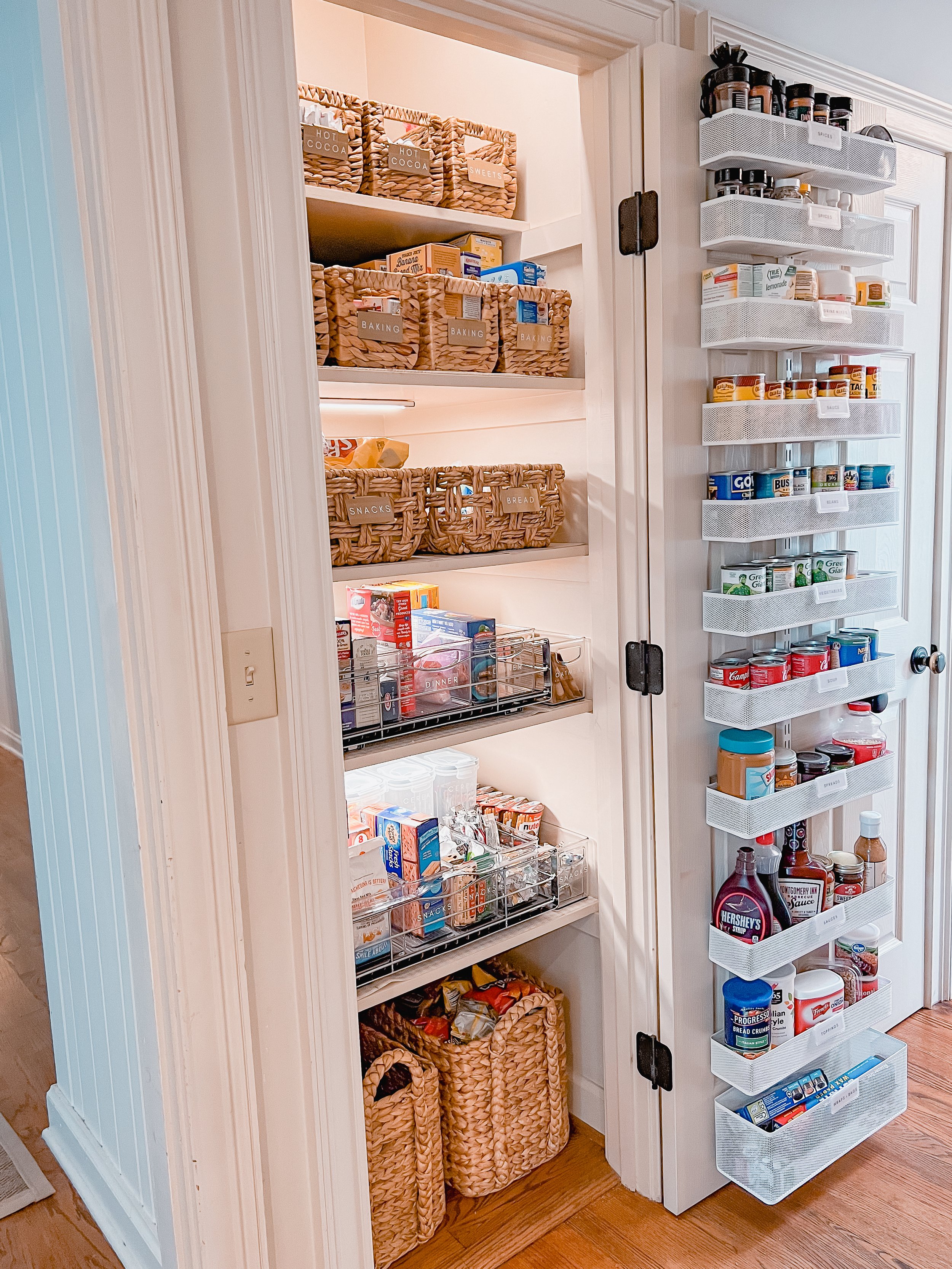

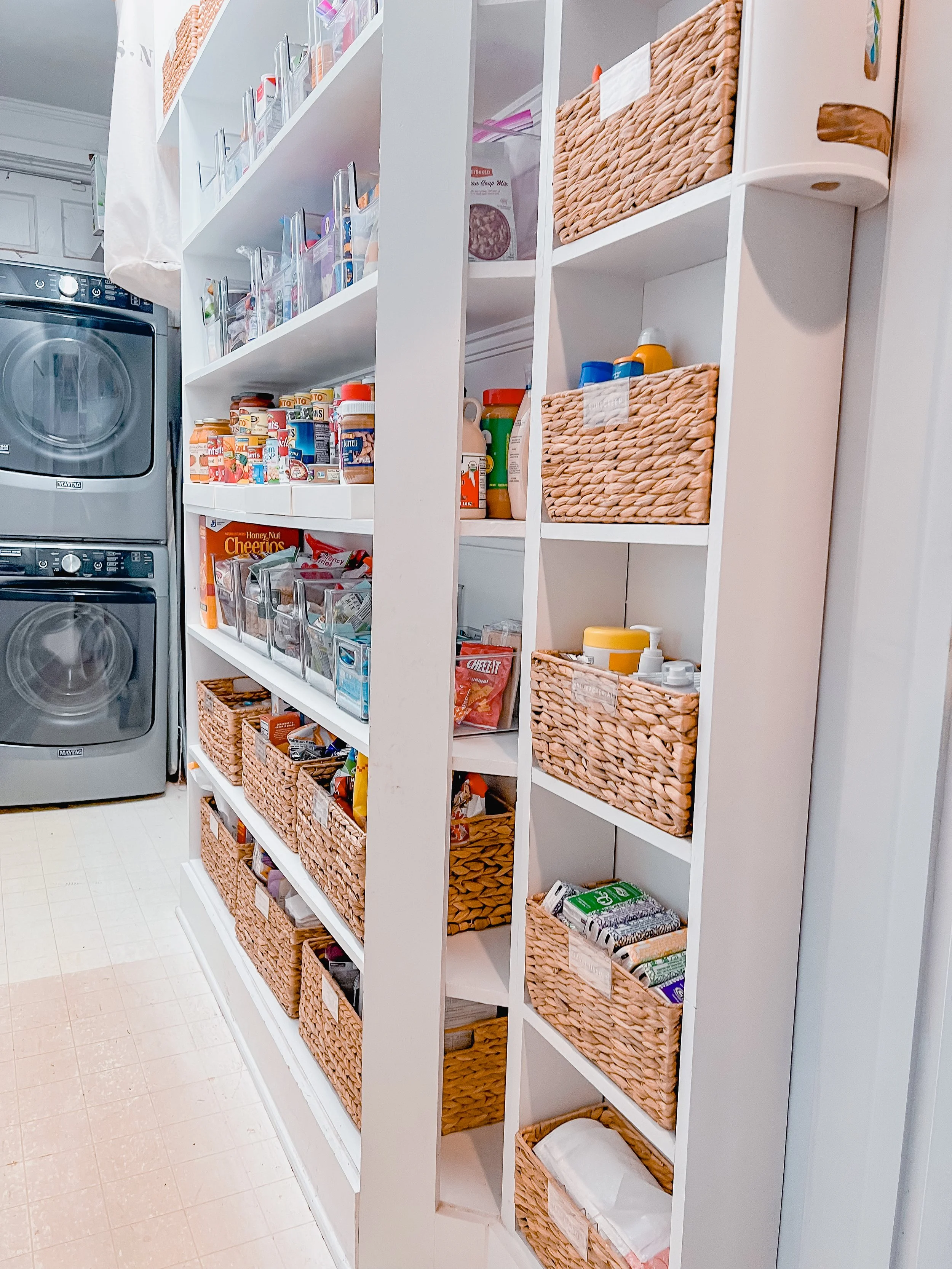
The pantry is one of the most requested spaces we organize and one of the most satisfying transformations we get to be part of. There is something deeply gratifying about opening a pantry door and immediately being able to see and reach everything you need.
But a beautiful pantry that falls apart in two weeks isn't the goal. The goal is a system that works on a Tuesday morning when everyone is rushing out the door, on a Sunday night when you're trying to figure out what to make for dinner, and six months from now when the back-to-school chaos hits.
Here's how we approach pantry organization, and what makes the difference between a system that lasts and one that doesn't.

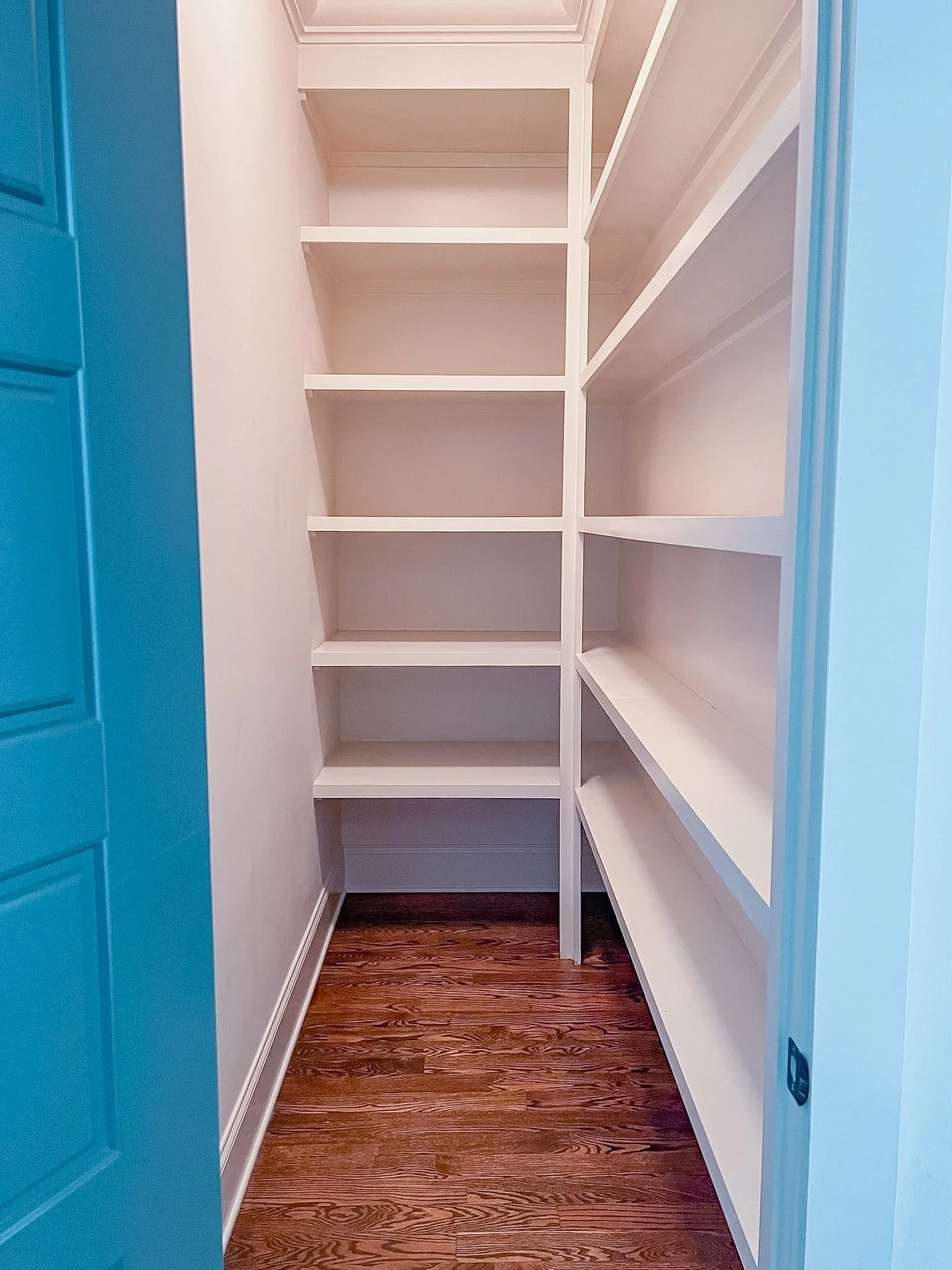
Step 1: Take everything out
This is non-negotiable. You cannot organize a pantry by moving things around inside it. Everything comes out. That means every can, every box, every mystery bag that's been in the back of the shelf for two years.
As things come out, check expiration dates. Toss anything expired, anything you know your family won't eat, and anything that's nearly empty and taking up space. This step alone creates more room than most people expect.
This is also the perfect time to give everything a good wipe down. Pull out the vacuum if you need to and really get the pantry clean so it’s fresh and ready when you bring everything back.
Step 2: Sort into categories
Before anything goes back in, sort everything into categories. This is where the real organization begins because categories are the foundation of every system we build.
Common pantry categories include:
Breakfast (cereals, oatmeal, pancake mix)
Snacks (kids' snacks, adult snacks, grab-and-go items)
Baking (flour, sugar, chocolate chips, extracts)
Canned goods and dry goods (pasta, rice, beans, soups)
Condiments and oils
Paper products
Appliances
Backstock
Your categories should reflect how your family actually uses the pantry, not a generic template. If your kids pack their own lunches, a dedicated school lunch zone at their eye level is a game changer. If you bake every weekend, your baking supplies should be easy to access.
Step 3: Assign zones before you buy anything
This is the step most people skip, and it's why they end up with bins that don't fit or a layout that doesn't make sense.
Before you buy a single product, decide where each category will live. Think about:
Frequency of use: things you reach for every day should be at eye level and easy to grab.
Who is using it: kids' items should be at kids' height so they can get things themselves and put them back.
Weight: heavier items like large cans and appliances belong on lower shelves.
Visibility: the more visible something is, the more likely it gets used and put back correctly.
And, don’t forget to measure! Make sure you measure the height, width, and depth of each shelf.
At Sort & Simplify, we always measurements of every pantry before we recommend a single product. This is how we make sure everything we purchase actually fits (and works) in your specific space.
Step 4: Choose products that work for your family
Not all organizing products are created equal. The most beautiful option isn't always the most functional one. Here's what we consider when selecting pantry products:
Clear bins and containers so you can see what's inside without opening everything.
Appropriate sizing: bins that are too big get overfilled and messy; bins that are too small don't hold enough to be useful.
Easy access: open bins and turntables are always easier to maintain than lidded containers for everyday items.
Durability: products that will hold up to daily use and won’t be ruined if food happens to spill inside them
The right dimensions for your space! Making sure that the products will fit your pantry’s dimensions and fully maximize the space is key.
We do all of the product research and shopping for our clients before project day. This way, when we arrive to organize your pantry, everything we need is already there. No waiting on deliveries, no making do with the wrong size bin.
Step 5: Label everything
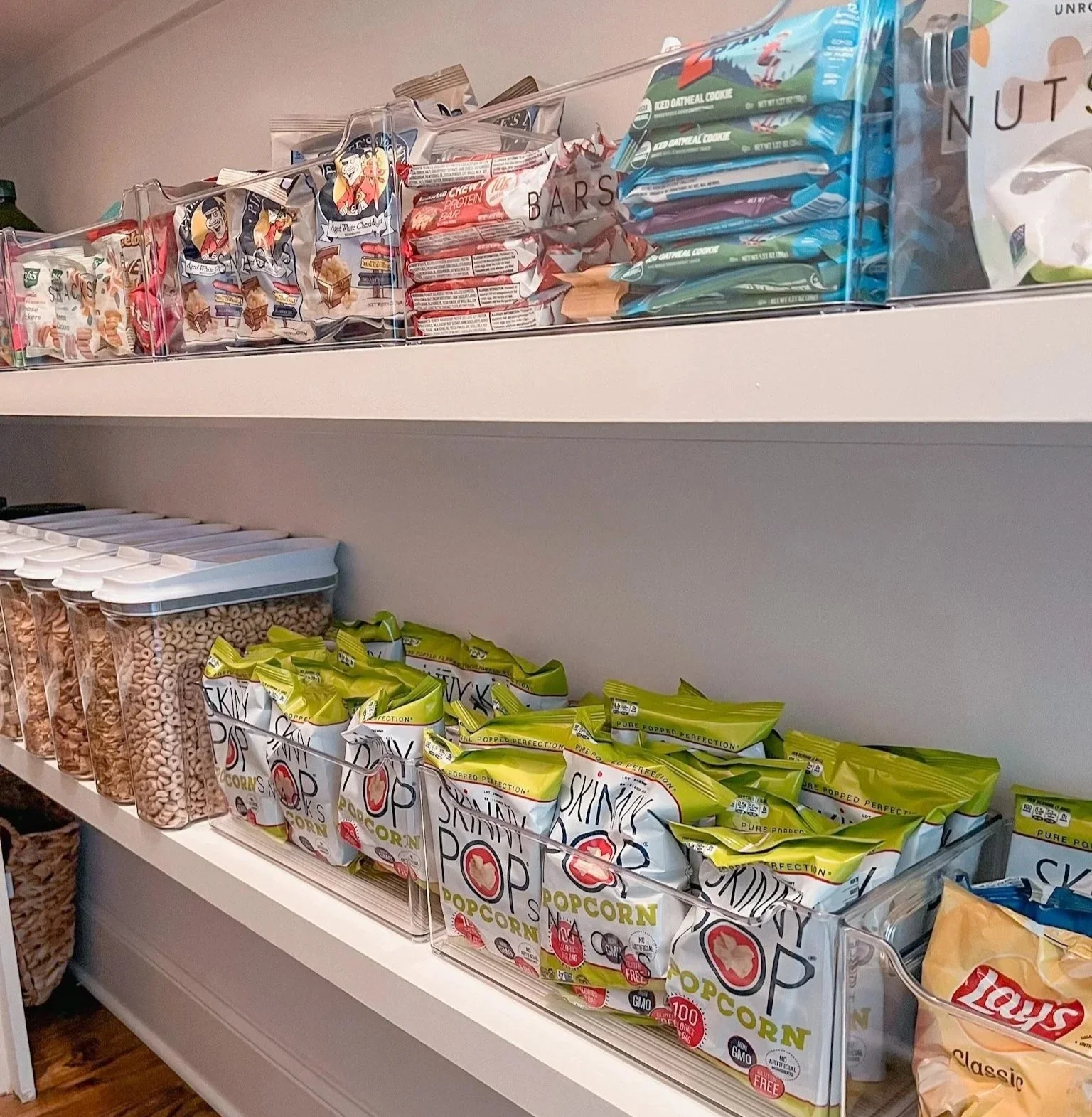
Labels are what make a system last. Without them, everyone in the family is guessing where things go, and things end up in the wrong place, which slowly unravels the whole system.
Good labels are clear, consistent, and use language your whole family understands. For younger kids, we love using picture labels alongside words so they can identify where things belong before they're reading confidently.
Labels also remove the mental load of deciding where to put something away. When you're unloading groceries at the end of a long day, you shouldn't have to think about where the crackers go. The label tells you.
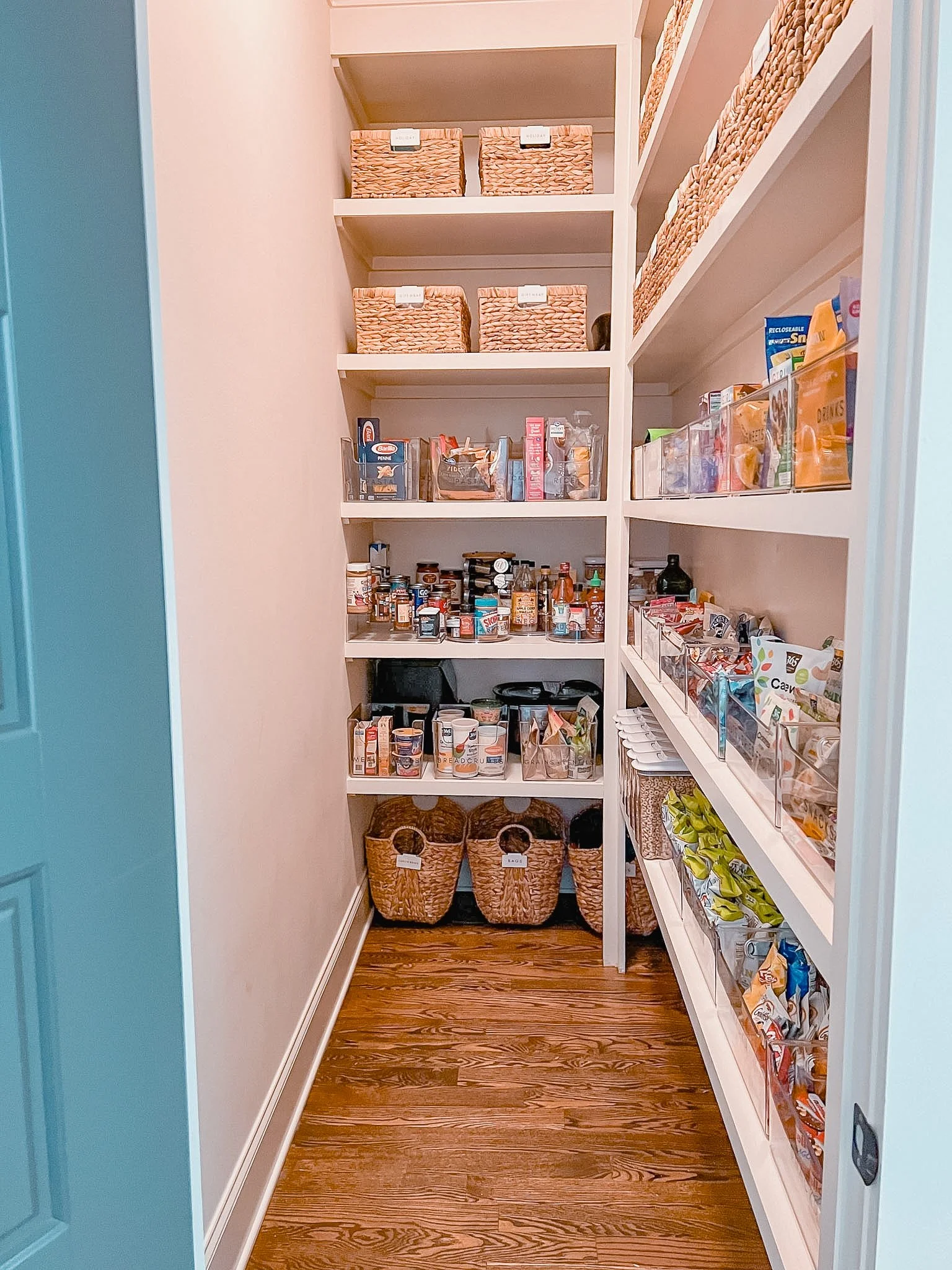
Step 6: Maintain it with a simple reset routine
Even the best pantry system needs occasional maintenance. A weekly five-minute reset can look like pulling things back to their zones, tossing anything empty, and making sure everything is facing forward. Just a quick resent is all it takes to keep a well-organized pantry running smoothly.
We also recommend doing a bigger reset every few months, especially before a major grocery run or the start of a new school year. Check expiration dates, reassess categories if your family's needs have changed, and update labels if necessary.
If you find yourself regularly resetting the same area, that's a signal that the system might need to be adjusted. A good system should be easy to maintain. If it's not, something about the design isn't working for your family. That's what our maintenance sessions are for.
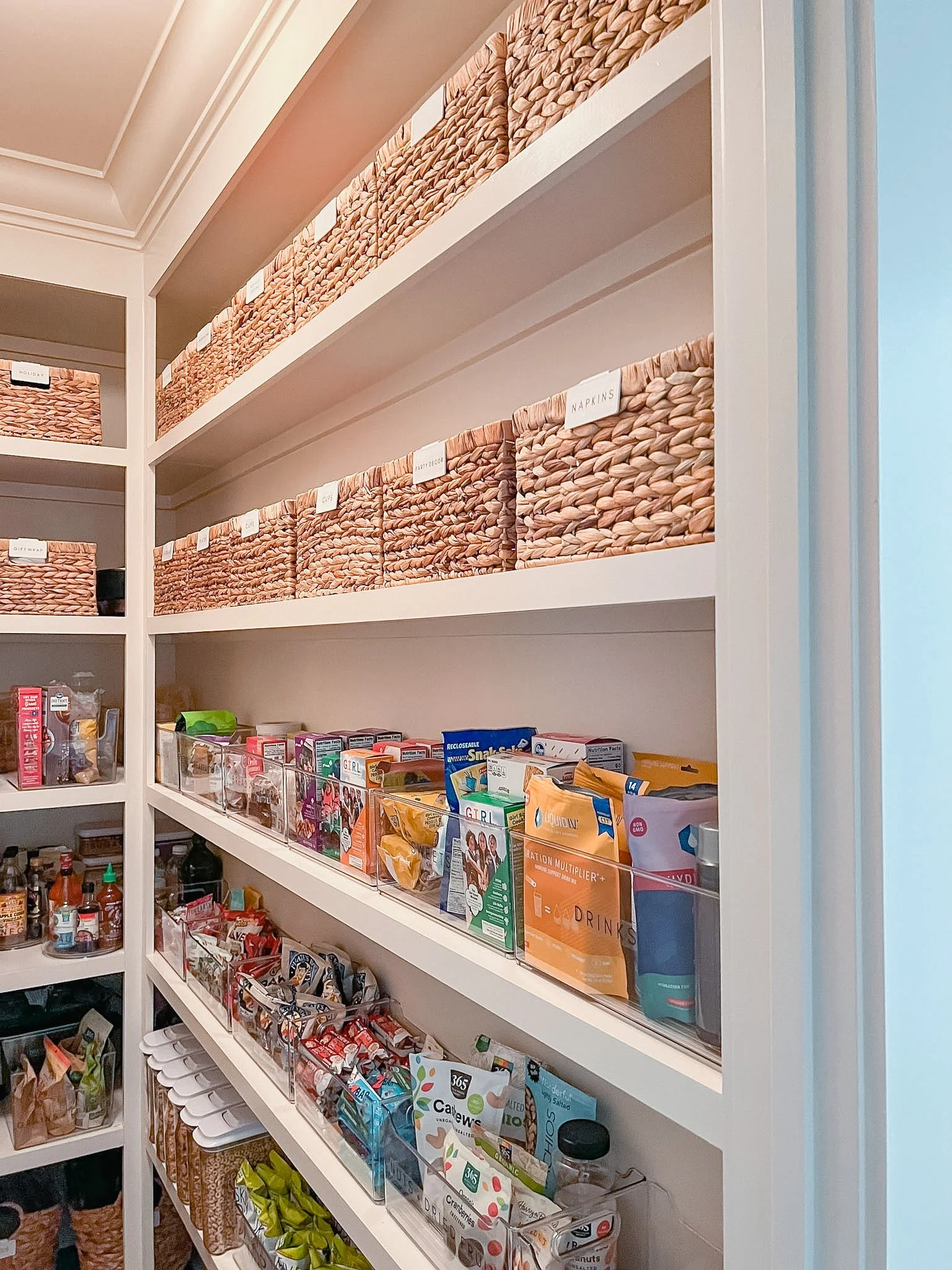
When to call a professional
If you've tried to organize your pantry before and it hasn't stuck, it's worth considering professional help. Not because you can't do it, but because an outside perspective, a thorough product plan, and a team that can execute the whole project in one day makes a significant difference in the result.
The pantry projects we're most proud of aren't the ones that look the best on day one. They're the ones where a client is still proud of their pantry two months later.
"I never thought I would be proud of the state of my pantry or my boys’ closets and dressers but I show them to every visitor to my house. Most impressive of all is that 2 months out from her visit everything is still in perfect order because she created a system that works for us!"
Ready for a pantry that actually stays organized?
If your pantry is one of those spaces you dread opening, let's change that. We'd love to come take a look. Click the button below to get started!